
Summer in Western North Carolina means one thing for a lot of us: it's time to get outside. Whether you're a weekend warrior, a seasoned thru-hiker, or someone who just discovered that walking in the woods is good for the soul (science agrees, by the way), the trails around Asheville are calling your name.
But the outdoors has a way of humbling people who don't prepare. Every season, we see patients come in with injuries, infections, and encounters that were entirely preventable. So before you lace up those boots, here's what every hiker should know.
Plan Before You Go — Seriously, the Gear Doesn't Save You
There's a certain type of hiker who spends $400 on a backpack and then doesn't tell a single soul where they're headed. Don't be that person.
Preparation is the single most important thing you can do before a hike, and most of it costs nothing. Tell someone your plan — where you're going, which trail, when you expect to be back, and what to do if they don't hear from you. Rescue teams will thank you.
Check the weather. Afternoon thunderstorms are a real thing in the Southern Appalachians, and a clear morning can turn dangerous on an exposed ridge by 2 p.m. Download offline maps (AllTrails, Gaia GPS) before you leave cell range. Know your route, know your turnaround time, and be honest with yourself about your fitness level. The summit will still be there next weekend.
What Actually Belongs in Your Pack
You don't need to carry your entire house. You do need to carry the right things. Here's a distilled version for day hikes and short overnights:
Navigation:
A downloaded offline map and a basic compass. Your phone battery will die at the worst possible moment. That's not pessimism — it's experience. So have a paper map as backup. Also, download offline Google Maps so that it will work in remote regions.
Sun protection:
Sunscreen (SPF 30 minimum), sunglasses, and a hat. UV exposure increases about 4% per 1,000 feet of elevation gain.
Hydration:
More water than you think you need — roughly half a liter per hour of moderate hiking in mild weather, more in heat and on tough terrain. Never drink untreated water from backcountry sources; even clear mountain streams can harbor Giardia and Cryptosporidium.
A quick note on water treatment, because this matters clinically: halogens — iodine and chlorine tablets — do not kill Cryptosporidium oocysts and should not be relied upon as your primary treatment method. Physical microfiltration using a hollow-fiber membrane filter rated at 0.1–0.2 microns (such as a Sawyer Squeeze or similar) will remove protozoa including Giardia and Cryptosporidium effectively. However, standard filters do not eliminate viruses. While viral contamination is uncommon in WNC wilderness, norovirus has caused outbreaks in high-traffic Appalachian Trail shelters. In those settings, boiling water for at least one minute (three minutes above 6,500 feet) is the most reliable method to neutralize enteric viruses. For full-spectrum protection on any overnight trip, boiling remains the gold standard.
One clinical note: pregnant women and individuals with thyroid disease should avoid iodine-treated water entirely. If you fall into either category, plan ahead — carry a quality filter and the means to boil.
Food:
High-calorie, low-fuss snacks. Running out of fuel on trail makes every decision worse — and they were already questionable.
First aid kit:
Blister treatment, bandages, antiseptic wipes, moleskin, tweezers, a sharpie, and personal medications. (Don't forget chewable antihistamines for stings, and an EpiPen if you have known severe allergies).
Emergency shelter:
A space blanket weighs almost nothing and could genuinely save your life.
Light:
A headlamp with extra batteries. Not your phone flashlight — your hands need to be free.
Layers:
A packable rain jacket is non-negotiable in WNC. Temperatures drop fast in the mountains, especially after dark or in rain.
The Golden Rule: Avoid cotton entirely. "Cotton kills" is a cliché because it's true. It holds moisture, destroys insulation, and summer hypothermia is a real and underappreciated threat in the high country. Stick to moisture-wicking synthetics or merino wool.
Basic Safety on the Trail — Simple Rules That Make a Real Difference
Ticks: The Uninvited Guests
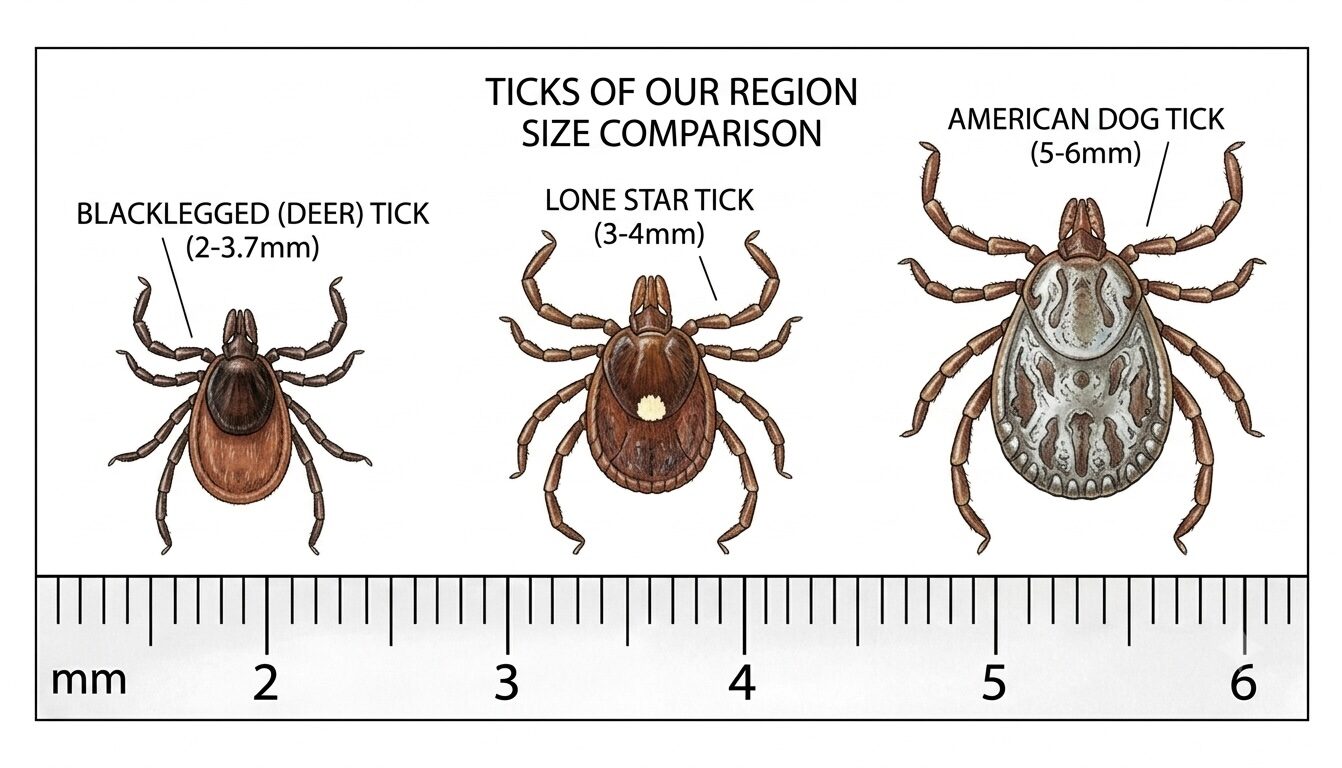
Ticks are on every trail in our region. The blacklegged (deer) tick can transmit Lyme disease; the lone star tick and American dog tick are also active spring through fall — exactly when you're out there.
Wear light-colored, synthetic clothing so ticks are easier to spot. Treat clothing and gear with permethrin (it survives multiple washes) and apply DEET-based repellent to exposed skin. Stay on trail and avoid brushing through tall grass and leaf litter.
After every hike, do a thorough tick check — scalp, behind the ears, armpits, groin, behind the knees. Shower within two hours of returning home. If you find an attached tick, remove it with fine-tipped tweezers as close to the skin as possible, clean the area, and watch for a bullseye rash or flu-like symptoms in the following weeks. If either develops, come see us. A single dose of doxycycline after removing an engorged blacklegged tick significantly reduces the risk of Lyme disease (review specific guidelines here).
Plants That Cause Problems
Three plants worth knowing: poison ivy, poison oak, and stinging nettle.
- Poison ivy is the most common culprit. "Leaves of three, let it be" still holds, though the plant can appear as a ground cover, vine, or shrub depending on the season. The oily resin (urushiol) causes a blistering, intensely itchy rash 12–72 hours after contact. Wash exposed skin with soap and water as soon as possible. Calamine lotion and hydrocortisone cream handle mild cases; if your face is involved or you're having trouble breathing, seek medical care promptly.
- Stinging nettle causes immediate burning and hives on contact. The sting delivers a mix of histamine, acetylcholine, and serotonin into the skin — which explains why the reaction is immediate and unpleasant rather than delayed like urushiol. Symptoms typically resolve within a few hours. Dock leaves, which often grow conveniently nearby, are a long-standing folk remedy — though it's worth knowing the relief isn't from pH neutralization as commonly claimed. Dock leaf sap is acidic and doesn't chemically counteract the sting; any benefit likely comes from mild serotonin-receptor antagonism, evaporative cooling, or the simple comfort of doing something. Nature's sense of humor remains intact.
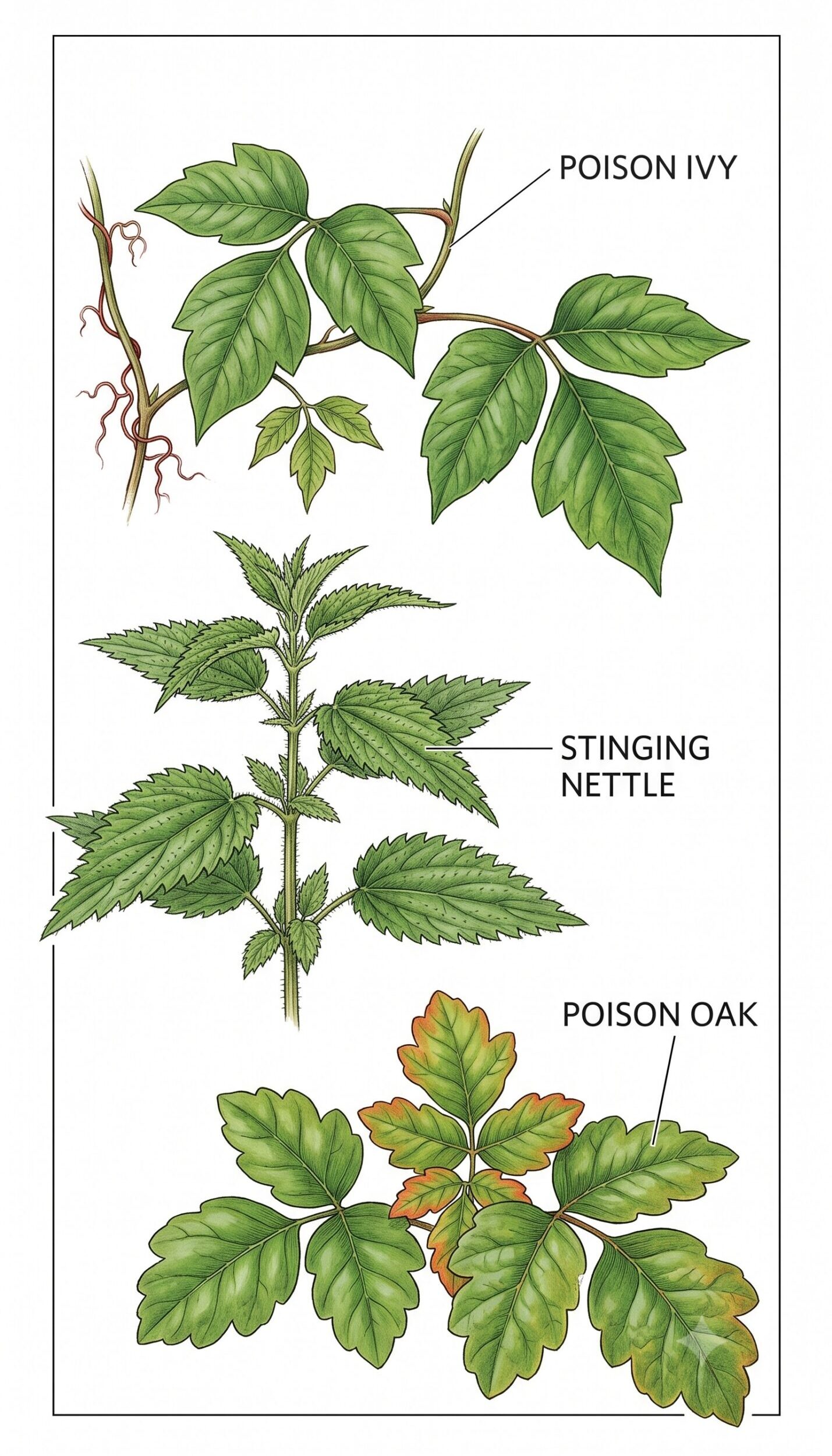
- Poison oak does not grow in the mountainous regions of North Carolina — if you're hiking in the WNC highlands, poison ivy is the urushiol exposure you're watching for. Poison oak is worth knowing if your travels take you to the piedmont or coastal regions of the state, where it does appear.
Snakebite Precautions
Western North Carolina is home to two venomous species: the copperhead and the timber rattlesnake. Encounters are uncommon, but they happen — particularly in rocky, sunny areas and near water.
The good news: snakes don't want to bite you. The vast majority of bites happen when people accidentally step on or try to handle one. Look where you're putting your hands and feet, especially when stepping over logs or reaching into rocky crevices. Wear sturdy, ankle-covering boots. Be extra cautious at dawn and dusk.
If a bite occurs: stay calm, move away from the snake, remove any tight clothing or jewelry near the bite, and begin making your way toward emergency medical care immediately.

While you are en route or waiting for first responders, take out that sharpie from your first aid kit and circle the edge of the bite site, writing the exact time next to it. Re-draw and time-stamp the perimeter every 15–30 minutes as you move. This gives ER doctors critical data on how fast the venom is spreading — which dictates antivenom dosing.
- Do NOT apply a tourniquet.
- Do NOT attempt to suck out venom.
- Do NOT cut the bite.
These old-school remedies cause severe tissue damage and do far more harm than good. Call 911 or head to the nearest ED. The Carolinas Poison Center (1-800-222-1222) can advise while you're en route.
Ground-Nesting Insects: The Sneaky Summer Menace
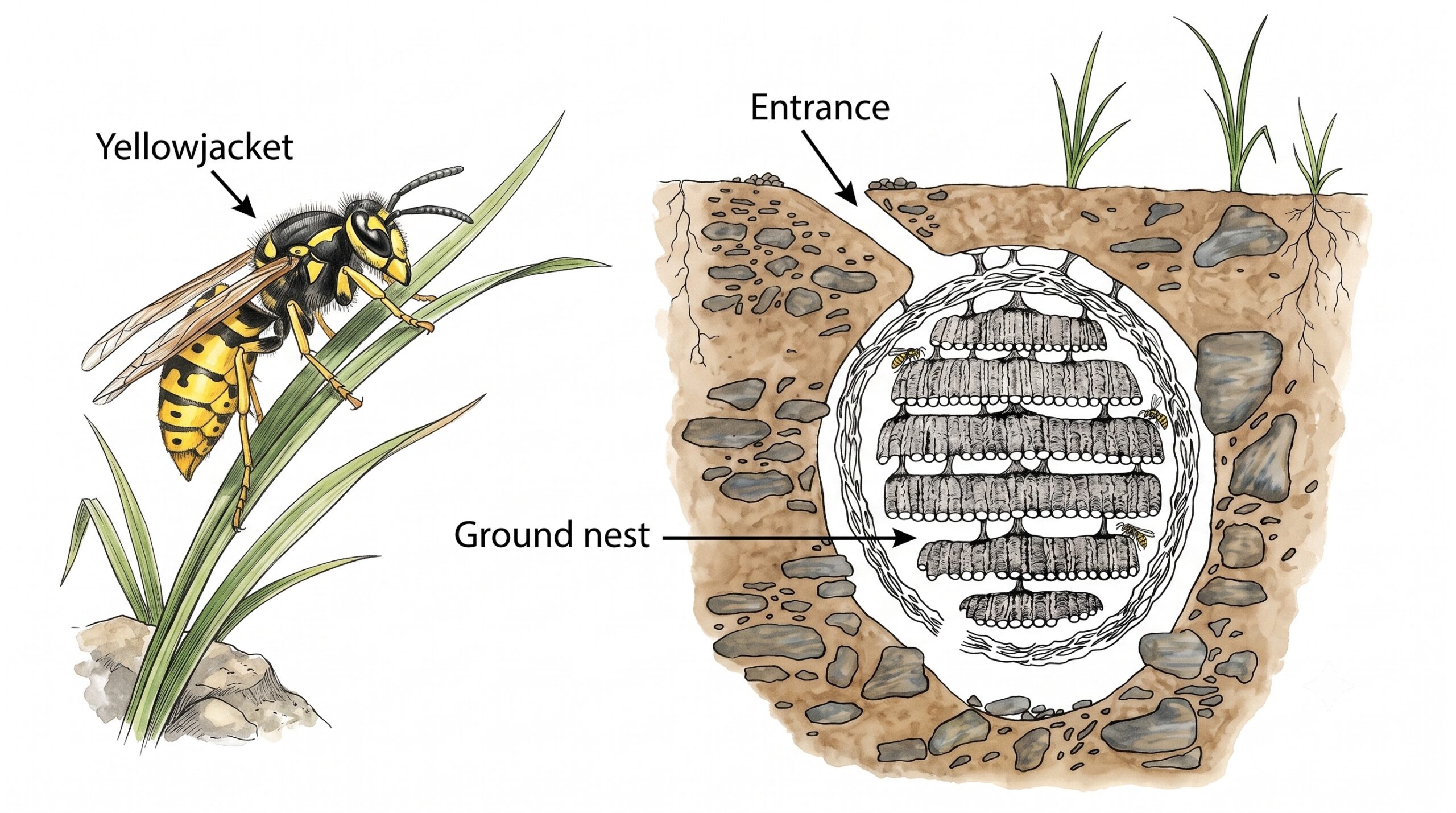
Ticks and snakes get the bad press, but late-summer yellowjackets cause the most acute trail emergencies around Asheville. They nest underground—under roots, logs, or trail steps—and a single misstep can trigger a swarm.
-
- Watch your step: Stay centered on the trail and avoid stepping near decaying wood or dense root systems.
- If attacked, run: Do not swat or play dead. Run forward quickly to put distance between you and the nest.
- Pack the right meds: If you are severely allergic, an EpiPen is non-negotiable. If not, pack chewable antihistamines (like Benadryl) to treat pain and swelling from multiple stings while you hike out.
Leave It Better Than You Found It
The trails we love are a shared resource. Pack out everything you pack in — including food scraps and fruit peels. Orange and banana peels can persist for up to two years in cold, high-elevation environments, and feeding wildlife, even unintentionally, causes real harm through habiteration and food conditioning.
Stay on marked trails. And take campfire regulations seriously — more seriously than usual right now. The volume of dry timber debris left by Hurricane Helene has significantly elevated wildfire risk across WNC forests. Check current USFS fire restrictions before your trip, and if fires are permitted, extinguish them completely using the "Drown-Stir-Drown-Feel" method: drown the fire with water, stir the ashes, drown again, then feel for any remaining heat with the back of your hand. If it's too warm to touch, it's not out.
We feel strongly about this as a clinic: time in nature is genuinely powerful medicine. Research consistently shows it reduces stress, improves mood, supports cardiovascular health, and improves sleep quality. We want these trails intact and beautiful for the next generation of patients who need them.
The Bottom Line
The mountains aren't dangerous — they're just honest. They reward preparation and punish carelessness, usually in that order. A little planning, the right gear, and some basic awareness of what's out there goes a long way toward making every trip one you'll want to repeat.
Come join us at our upcoming community event where Chad, Michael, and I will be sharing our favorite hikes, cautionary tales, and practical trail wisdom. Bring your questions, your gear opinions, and your best story about a trail that humbled you. We all have one.
See you out there.
References
- Fradin MS, Day JF. Comparative Efficacy of Insect Repellents Against Mosquito Bites. New England Journal of Medicine. 2002;347(1):13–18.
- Centers for Disease Control and Prevention. Tick Removal. https://www.cdc.gov/ticks/removing_a_tick.html
- Gold BS, Dart RC, Barish RA. Bites of Venomous Snakes. New England Journal of Medicine. 2002;347(5):347–356.
- Leave No Trace Center for Outdoor Ethics. The Seven Principles. https://lnt.org/why/7-principles/
- Bowler DE, et al. A Systematic Review of Evidence for the Added Benefits to Health of Exposure to Natural Environments. BMC Public Health. 2010;10:456.
- Carolinas Poison Center: 1-800-222-1222

This blog post was produced by Tom Everts, PA-C, a medical provider and Director of Education at Integrative Family Medicine. You can read more about Tom in his bio.