
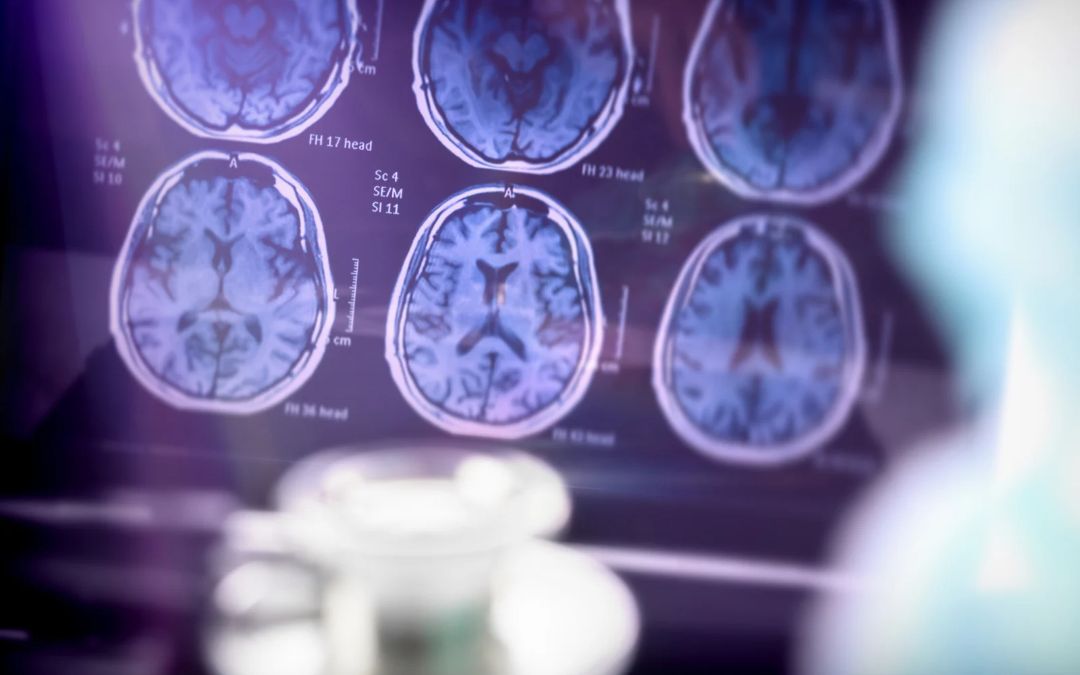
Alzheimer's disease (Alzheimer's dementia) is a progressive brain disorder that slowly erodes memory, thinking, behavior, and the ability to perform everyday activities. It is the most common cause of dementia (a general term for a significant decline in mental ability which interferes with independent functioning). Although it is far more prevalent in the elderly, it is not a normal part of aging.
Alzheimer's generally develops slowly over a number of years. The initial symptoms are often quite mild but do tend to become more apparent as time goes on. Eventually the individual will reach a stage where they require assistance with everyday activities such as cooking, taking their medication, dressing and bathing. The rate at which it progresses is highly variable from person to person.
What Causes Alzheimer’s Disease?
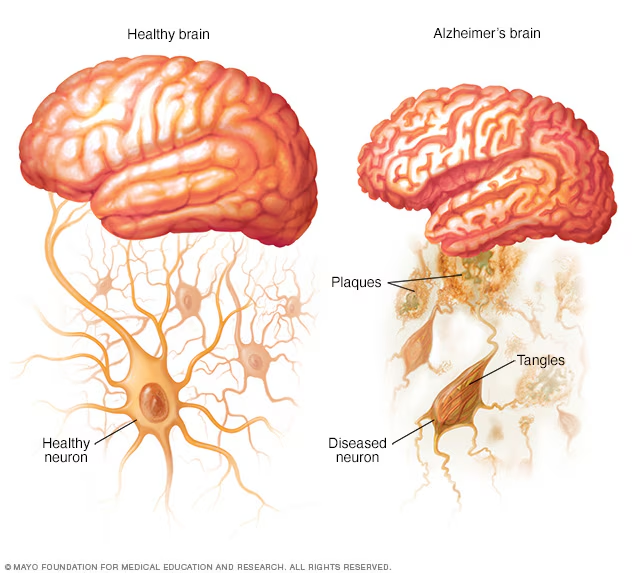
Alzheimer's disease is a disease of the brain involving changes that damage and kill neurons. The two key proteins involved are beta-amyloid and tau. Beta-amyloid can accumulate to form plaques between the brain cells, while abnormal tau forms tangles within the cells. These changes disrupt the communication between the brain cells and ultimately lead to the death of the cells.
The precise cause of Alzheimer's disease is unknown. Age is by far the biggest known risk factor, but the development of the disease is not an inevitable consequence of aging. Family history and certain inherited genes can increase the risk. There are also a number of modifiable risk factors (high blood pressure, diabetes, smoking, physical inactivity, hearing loss, cardiovascular disease) which may affect the risk of developing Alzheimer's.
The vast majority of people with Alzheimer's don't have a single identifiable cause. It's probably the result of a combination of genetic, biological, environmental and lifestyle factors.
Signs and Symptoms
Memory loss (or Amnestic Mild Cognitive Impairment) is an early indicator of Alzheimer's Dementia. The individual may repeatedly ask the same question, forget the details of recent conversations, lose their own belongings or forget appointments. Occasional forgetfulness can be part of the normal aging process but if the forgetfulness is persistent and starts to interfere with day to day living then it is clearly something that requires a medical evaluation.
Other symptoms may be difficulty finding the right words, following a conversation, solving problems, managing money or carrying out familiar tasks. Some people become confused about the date or place, have trouble with recognizing familiar places and may have changes in their judgement and decision making.
As the disease progresses, you can see changes in mood and behavior. The person may become anxious, irritable, withdrawn, suspicious or agitated. Sleep disturbance and wandering may occur. In the later stages of the disease, the individual may have significant difficulty with communication, walking, eating, and may lose the ability to recognize family and friends, requiring a great deal of help and supervision.
These symptoms can also be seen in other medical conditions. Sudden confusion in particular may be the sign of something quite serious (an infection, a reaction to medication, a stroke, etc.) rather than the slow progression of Alzheimer's disease.
How is Alzheimer's disease diagnosed?
There is no single test for Alzheimer's disease. Diagnosis generally involves a review of the symptoms, the individual's medical history, their medications and any changes in their day to day functioning. The clinician will often ask family members about the changes they have seen and will use a number of brief memory and thinking tests.
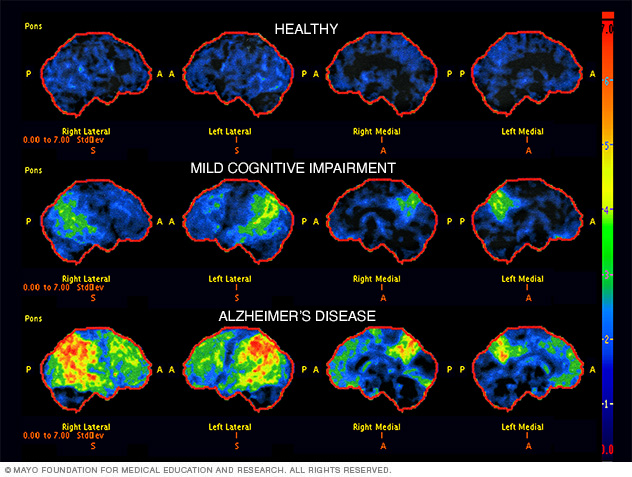
Blood tests can identify other causes of cognitive symptoms (vitamin B12 deficiency, thyroid problems, etc.). Brain imaging (MRI, PET scan) can rule out stroke, tumor, or other abnormalities. In selected cases, specific tests can detect serum biomarkers of Alzheimer's disease.
Early assessment is key as some of the causes of memory problems are amenable to treatment. A diagnosis can also be of immense value to the individual and their family in terms of planning for the future as the person is still able to be involved in decisions about their own care.
Treatment and Management
There is no cure for Alzheimer's disease. Medication is available with the aim of slowing the progression of the disease, managing symptoms and improving quality of life. The medications are not for everyone; they do not reverse any of the lost functions and can have significant side effects. They will require a full evaluation by a Neurology specialist, confirmation of the Alzheimer's related brain changes, and ongoing monitoring for any adverse effects.
Healthy lifestyle habits can support both brain and general physical health. This includes regular aerobic exercise, sufficient sleep, a healthy balanced diet, social interaction, and the management of conditions such as hypertension and diabetes. Hearing and visual problems should also be addressed. They won't necessarily prevent the disease or stop it altogether but will contribute to your general health and well-being.
Creating routines, simplifying the tasks of daily living, minimizing household hazards and using reminders may all help people to remain independent for longer. Any behavioral changes should be discussed with a healthcare professional, as pain, illness, the effects of medication, and environmental stress can all be contributory factors to distress.
Supporting Individuals and Families
Alzheimer's disease affects far more than the individual who has it. The family and caregivers can be subjected to significant emotional stress, exhaustion, financial pressure, and a sense of uncertainty about the future. The Alzheimer's Association (https://www.alz.org/) is an excellent source of information and support for carers. It's very much worth taking the time to learn about the disease, share the caring responsibilities, look into respite services, and get involved with support groups as a way of alleviating some of the pressures.
Planning ahead is also worthwhile. It's often easier to have conversations about driving, money, where you'll live, advance directives and future care when you're still in a relatively healthy state. The decisions you make should be ones that are in keeping with the person's wishes, their dignity and their capacity.
Conclusion
Alzheimer's is a neurodegenerative disease which affects memory, thinking, behavior and independence. There is no cure, but early diagnosis, appropriate treatment, healthy lifestyle, safety planning and good support for caregivers can all make a real difference. Knowing what the disease is all about enables individuals and families to start to prepare for the changes that will occur, to access the available resources, and to focus on preserving dignity and quality of life throughout the course of the illness.
For more information on Alzheimer's see the links below.

This blog post was written by Richard Downing, FNP, a medical provider at Integrative Family Medicine. You can read more about Richard in his bio.
References
- Alzheimers.gov. (n.d.). Alzheimer’s disease. https://www.alzheimers.gov/alzheimers-dementias/alzheimers-disease
- Hsiao, J. K. (2026). Stopping Alzheimer disease: 50 years of progress. JAMA, 336(2), 103–105. https://doi.org/10.1001/jama.2026.10969
- Lui, F., & Tsao, J. W. (2024). Alzheimer disease. In StatPearls. StatPearls Publishing. https://www.ncbi.nlm.nih.gov/books/NBK499922/
- Mayo Clinic. (n.d.). Brain scan images for diagnosis of Alzheimer's disease [Image]. https://www.mayoclinic.org/diseases-conditions/alzheimers-disease/multimedia/img-20543518
- Rubin, R. (2026). Nearly half of dementia cases may be preventable—here’s what the research says so far. JAMA, 336(13), 1087–1089. https://doi.org/10.1001/jama.2026.9439
- Yin, C., Li, S., Zhao, W., & Feng, J. (2013). Brain imaging of mild cognitive impairment and Alzheimer's disease. Neural Regeneration Research, 8(5), 435–444. https://doi.org/10.3969/j.issn.1673-5374.2013.05.007